

A high water bill may be your first clue that something is terribly amiss. But there are a few other signs that signal you may be overwatering your landscape.
Sometimes the biggest water waste happens in perfectly manicured lawns, watering on the correct time and day, with no signs of broken sprinklers or anything wrong. In such a case, a high water bill may be the customer’s first clue that something’s terrible amiss in the water department. But here are a few signs to watch for — usually in summer, but any time of year if you’re overwatering:
- Cockroaches:
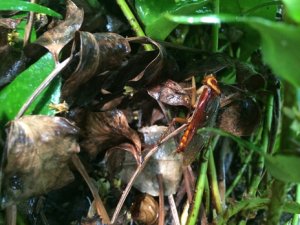 If you see cockroaches wandering around shrubs, pots, grasses and the yard in general, you’ve got a perfect habitat for cockroaches — and that means your yard is as wet as the inside of a sewer pipe. Sound gross?
Cockroaches thrive on decomposing plant material. So remember, all that extra water is probably building up as thatch and rotting your grass from below. Other insects that benefit from too much water: pillbugs, millipedes and especially fire ants.
2. Dollarweed: 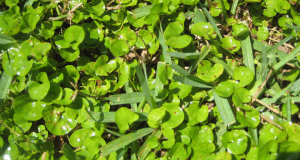 Dollarweed is one of those plants so tenacious it’s created an industry of big-box weed killers for homeowners trying to get rid of it. Hint: dollarweed requires even more water to look good than grass — so if your grass is drowning in dollarweed, put down the weedkiller and pick up the sprinkler instruction.
3. Fungus:
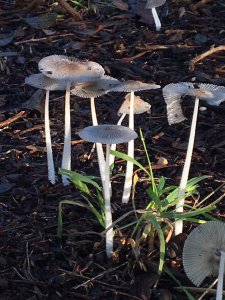 Has it been raining? Then look for mushrooms. But if there are still mushrooms in dry, warm winter weather, your lawn is probably staying wet and poorly drained; not a good idea, since in addition to mushrooms, some of the most common fungal turf diseases include take-all patch and brown patch.
4. Wet walls, fences, and cans: 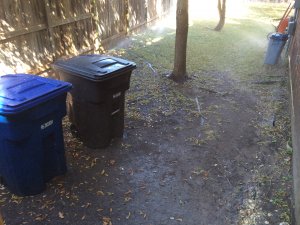 It’s not just the amount of water you use, it’s where you put it. By some estimates, about one-fifth of summer irrigation water is spent watering side yards, AC condensers, toolsheds and garbage cans — and that’s way too much. Heads in the side yard can be capped or turned off to reduce watering items that do not need the extra water.
5. Runoff: 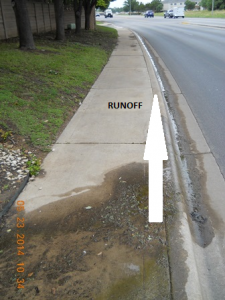 Pools of water are a sure sign the run times are too long on your sprinkler system. If the yard is too steep to hold much water, cycle and soak (watering shorter length of time, but multiple times in a row) may be a better method. Remember, your bedding plants typically need less water than grass.
So remember, use common sense when it comes to your outdoor use. If things feel or look too wet, reduce the time by 2 minutes to see how it helps the problems. Wait at least a week before making more changes.