

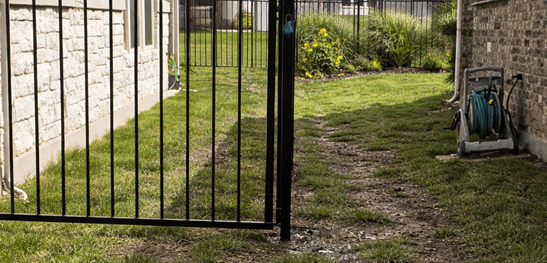
Do you struggle with a narrow side-yard that always seems to be muddy or patchy? We’ve been in plenty of backyards in Round Rock, and one issue we continue to see is thinning grass and soggy soils on the narrow side yards. There are a few reasons why you may see some stress in this area. Side yard lawn issues are often caused by a combination of limited sunlight, compacted soil, and overwatering.
Too much shade
Most new homes in Round Rock are planted with Bermuda grass because it tolerates drought and heat; however, it struggles in shade. Bermuda needs at least 8 hours of direct sun per day. If the side of your yard is shaded by a fence, your home, or a neighboring house, this limited sun exposure will cause thinning. If you water this area regularly, you may notice some standing water or too much mud. Lack of sunlight prevents evaporation, which causes standing water.
If there’s too much shade caused by permanent structures, there’s not much you can do to increase sunlight. You may have to choose a shade-tolerant groundcover, consider a hard scape, or a mix of both. For example, walking paths with large stepping stones surrounded by groundcovers can be an attractive and practical solution. Ground covers come in all shapes and heights. If you’re looking for a lawn alternative that will withstand some foot traffic, try Horse herb or Frog fruit. Horse herb does well during drought with some additional water and can withstand freezing temperatures. Frog fruit performs very well in drought conditions and requires minimal watering; although it goes dormant during freezes, it always returns in late spring. You may already have one of these native plants in your yard, and many local garden centers now carry them.
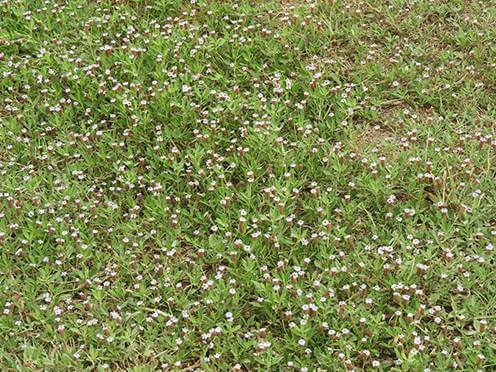
Richardson, C. (2018). Frog Fruit. Ladybird Johnson Wildflower Center. Phyla nodiflora (Texas frogfruit) | NPIN
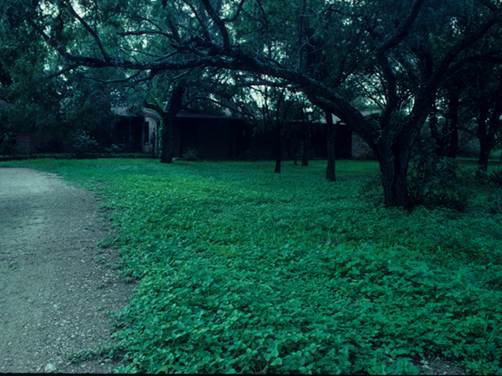
Wasowski, S. (1986). Horse Herb. Ladybird Johnson Wildflower Center. Calyptocarpus vialis (Horseherb) | NPIN
Compacted Soil
If your side yard receives enough sunlight but still appears muddy or patchy, compacted soil may be the cause. Soil compaction can happen over time with repeated foot traffic. It’s also very common in new construction, due to heavy machinery driving across the yard during the building process. Compaction prevents water from easily absorbing into the soil, which causes standing water, restricts oxygen from reaching plant roots, and causes damage to turf. Since much of Round Rock has clay soil, this is a common issue.
Rebuilding soil health will help your lawn grow thicker, prevent standing water, and promote healthy roots. One way to alleviate compaction is to aerate the soil. Core aeration removes small plugs of soil from the lawn, creating tiny holes that promote better air, water, and nutrient flow. After aerating, add compost to add more nutrients and amend the soil. Compost should be applied at a depth of no more than ½-inch over the entire grass portions of the lawn. Compost consists of natural materials, such as manure, chicken litter, green waste (lawn trimmings), and organic matter. Avoid adding mulch, rocks, topsoil, and chemical fertilizers after aerating. Aeration can be performed from spring to summer and is best done when there is adequate moisture in the soil. Clay soils tend to get more compacted than loam or sandy soils, which means you may need to aerate more often. It is recommended to aerate every 1 to 2 years to keep the soil healthy. If you are a direct City of Round Rock water customer, you can participate in the Healthy Lawn Rebate and get money back when you aerate your soil!
Too Much Water
A combination of shade, compacted soil, and excess water can quickly create muddy conditions. Standing water or persistent mud in a side yard may indicate overwatering. If you irrigate your lawn, each zone should be watered differently based on sunlight exposure, plant type, and sprinkler head type. Narrow side yards often have traditional spray heads, which apply a lot of water in a short amount of time. In heavily shaded areas, water for no more than five minutes. Sunnier side yards typically need no more than ten minutes. Also consider whether your neighbor’s irrigation system may be contributing water to your side yard and vice versa. Overlapping spray patterns can result in side yards being unintentionally double watered.
Understanding how shade, soil conditions, and irrigation interact allows homeowners to make informed adjustments, whether that means improving soil health, modifying watering schedules, or choosing more suitable plants or groundcovers.