

One of the main reasons for limited growth in outdoor landscaping is often a misunderstanding of its actual needs. Lawns are often overwatered in an attempt to encourage growth where it simply won’t happen. If a lawn or landscaping isn’t growing, or if it’s dying despite regular watering, it could be a sign of poor soil health.
Things to Consider
- Soil type and Slope
- Nutrients
- Soil compaction
Soil Type and Slope
Another important factor to consider is the type of soil in your yard. Most soil in the Round Rock area is composed of clay and lots of rocks, specifically limestone. This fine-grain texture can be difficult for water to penetrate when it’s dry and absorbs water very slowly. If your yard has any slope, there’s a good chance water is running off instead of soaking in. To prevent this, avoid watering for long periods all at once. Break up watering into short cycles. This allows the water to soak into the soil for a deeper, more effective watering. Set two start times and split your run time in half. For example, instead of watering a zone for 20 minutes once, water for 10 minutes twice.
Nutrients
The best way to determine what your lawn or landscape is lacking is to perform a soil test. The test analyzes the level of acidity, levels of nutrients (such as phosphorus, potassium, calcium, sulfur, etc.), and organic matter. This will help give a better understanding of what your soil needs and what plants will thrive best in the soil condition. Learn more about soil testing at Texas AgriLife Extension Soil Testing Service.

Compost
One of the best ways to improve soil health is by adding compost as an alternative to fertilizers. Compost is the nutrient-rich result of decomposed organic matter, essential for supporting soil fertility. It helps the soil’s ability to hold water and nutrients while adding depth to the soil layer for better water retention. Applying well-aged compost in the spring and fall helps enrich the soil, adding more nutrients, and giving your lawn or garden a better chance to thrive.
Aeration
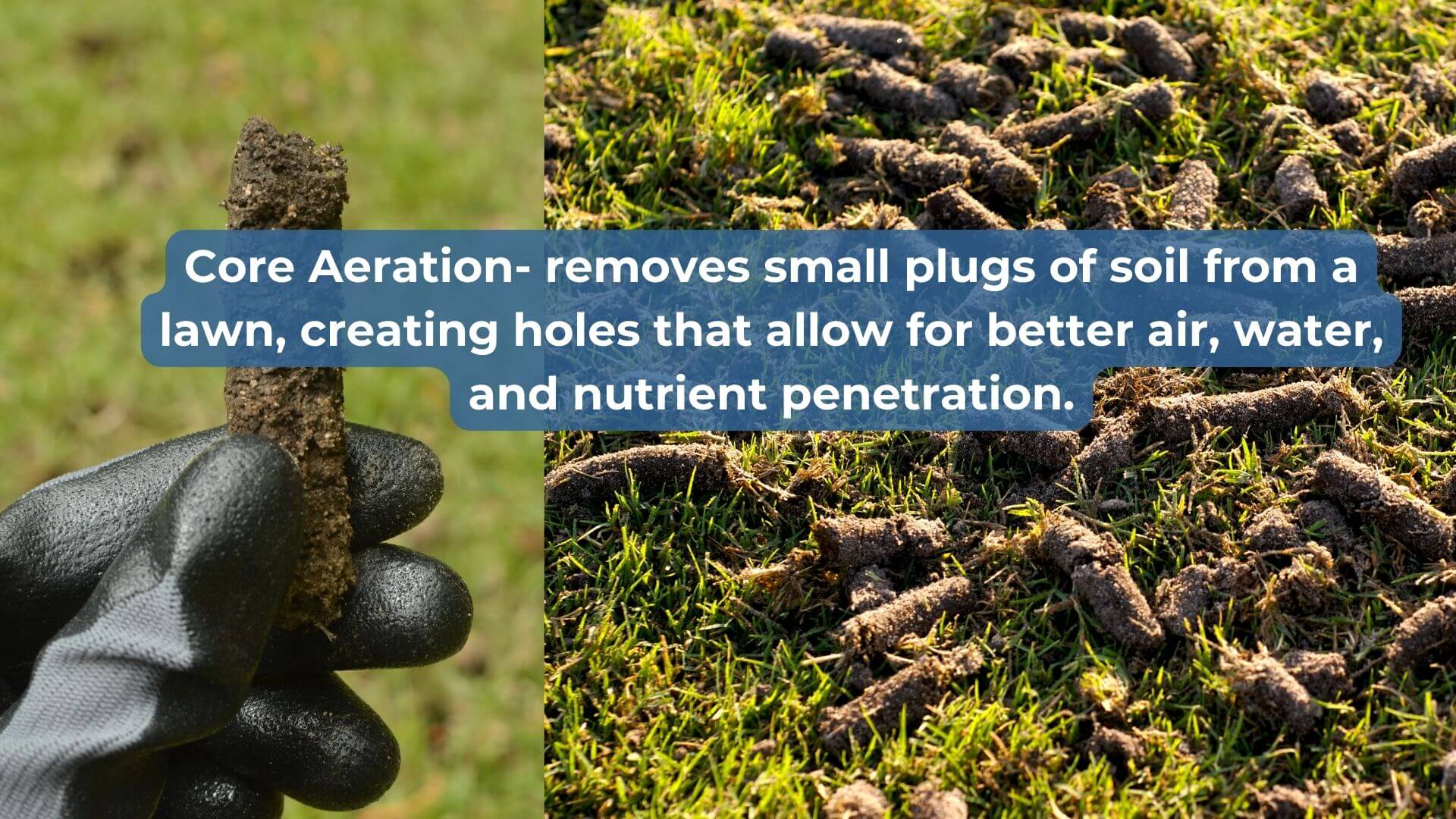
Aeration is another valuable practice that is often overlooked. Core aeration is the process of improving soil health by removing small plugs of soil from the lawn, creating tiny holes that promote better air, water, and nutrient flow. This practice is especially effective and useful if a yard has compacted soil that has trouble with drainage and absorption. Performing an aeration 1-2 times per year is always a good way to lend a helping hand to the soil and lawn.
Soil is the key component to a happy and thriving lawn. The next time your yard begins to look like it is dying, even with consistent watering, instead of watering it more, check the soil’s health.
Sources:
Boost plant growth with a simple soil test – AgriLife Today
Lawn Water Management | Publications | AgriLife Learn