

Now that it’s early fall, the effects of a long, hot, and dry summer are becoming more noticeable around town. After a couple months with little to no rainfall, most landscapes are relying heavily on irrigation systems or hand watering. Even when a part of town gets a brief shower, it often isn’t enough to replenish the soil or provide enough moisture that plants and turf need.
One of the most noticeable signs of summer drought stress is blonde or brown-looking grass. While it can be concerning to see your lawn lose its color, this is often a completely normal response to prolonged heat and drought. Many of our common warm season turfgrasses, including Bermuda, St. Augustine, and Zoysia, can enter a period of summer dormancy when conditions become too hot and dry. With cooler temperatures and some rainfall, healthy turf will gradually recover and green back up.
Irrigation system inefficiencies become more noticeable during drought, and we have noticed lots of random green circles and oddly shaped green patterns in lawns like the ones in these photos.
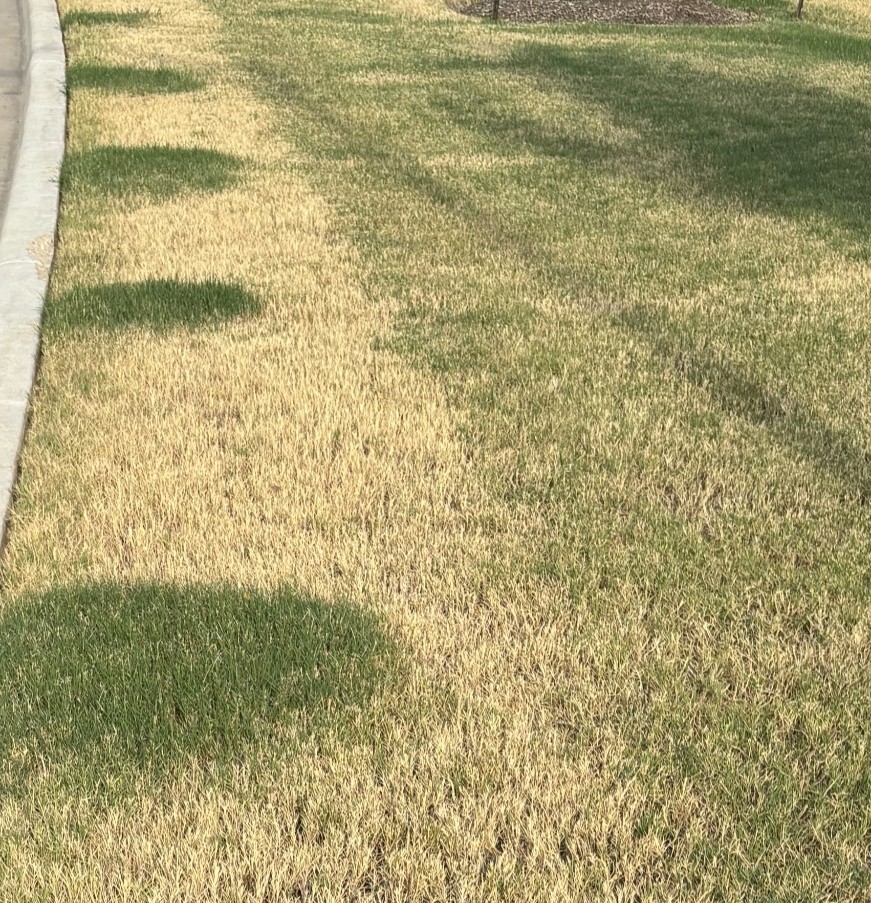
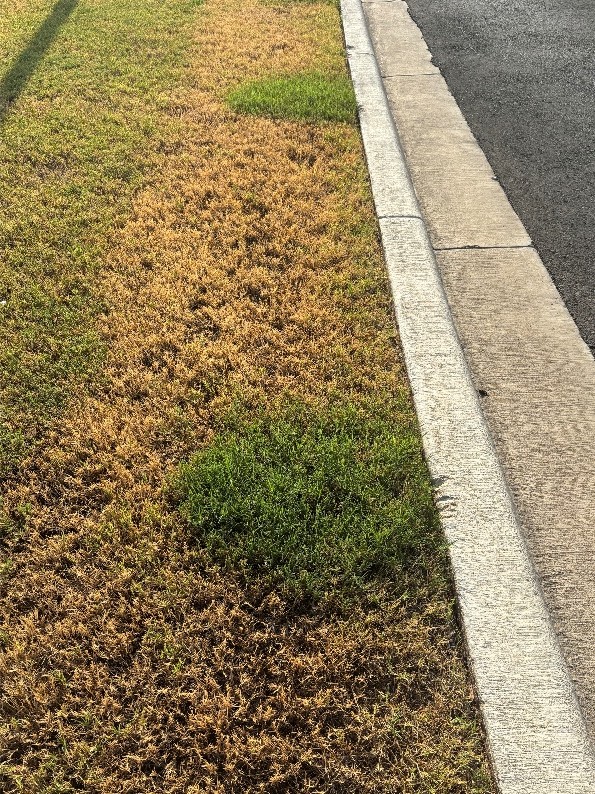
But these green circles aren’t random. They can be a sign that the sprinkler heads aren’t providing good coverage and are only watering a small area directly around each head. The result is that the grass closest to the sprinkler gets enough water to stay green, while the surrounding areas remain dry and turn yellow or brown.
Common Causes of Poor Sprinkler Coverage
1. Low Heads
- When a sprinkler head sits too low, the grass can block the spray pattern. Instead of spraying over the top of the lawn, much of the water gets caught within a few inches of the ground.
- Potential fix: A riser extension can be used to raise the sprinkler head so that it sits at the appropriate height. This can be done with spray and rotor heads, and it requires digging around the sprinkler.
2. Tilted Heads
- Sprinkler heads can become tilted over time because of shifting soil, lawn equipment, or vehicles driving over them. A tilted head may spray too far to one side or direct water into the ground instead of across the lawn.
- Potential fix: Dig around the sprinkler head and expose the sprinkler body. In some cases, the flexible swing joint underneath the head has become crooked and can be repositioned by hand.
3. High Pressure
- High water pressure can be a problem for spray heads. When pressure is excessive, the water mists instead of producing larger droplets that fall onto the lawn.
- Potential fix: Consider replacing spray nozzles with multi-stream rotary nozzles that are designed to operate at lower pressure. These nozzles can reduce misting and often provide more uniform coverage.
4. Grass Is Blocking the Sprinkler
- Sometimes the sprinkler itself is working properly, but the surrounding grass is simply too tall.
- Potential fix: Keeping grass or other plants from directly obstructing the sprinkler head can improve the spray pattern.
5. Clogged Nozzles
- Sprinkler nozzles can become clogged with dirt, debris, or hard-water buildup. A partially clogged nozzle may produce a weak spray pattern, resulting in poor coverage.
- Potential fix: Remove the nozzle and clean it thoroughly. If mineral buildup is the problem, soaking the nozzle in vinegar can help dissolve some deposits. Be sure to reinstall the nozzle correctly and check the spray pattern afterward.
Most of These Are DIY-Friendly Repairs
The good news is that many irrigation problems are relatively simple to diagnose and repair yourself.
Cleaning a clogged nozzle, correcting a tilted head, or replacing a nozzle are generally straightforward projects for a homeowner. Raising a sprinkler head with a riser extension can be a little more tedious because it requires digging, but it is still a manageable repair for many DIYers.
If you would rather have a professional inspect the system, hire a licensed irrigator. A professional can evaluate the entire irrigation system, identify coverage problems, check pressure and sprinkler performance, and make the necessary repairs.
If you are a Round Rock Water customer, having a professional inspection and completing repairs may also make you eligible for the Smart Irrigation Rebate program.
Don’t Confuse Drought Stress With Poor Irrigation
The most important thing to remember is that a yellow or brown lawn during drought does not necessarily mean the lawn is dying. What deserves a closer look is uneven coloring that follows the pattern of your sprinkler heads.