
The City is updating its Historic Design Guidelines. The Historic Preservation Commission (HPC) will consider the draft document at its meeting on Tuesday, November 17, at 6:00 P.M. at the City Council Chambers (221 East Main Street). This HPC meeting will include a public hearing.
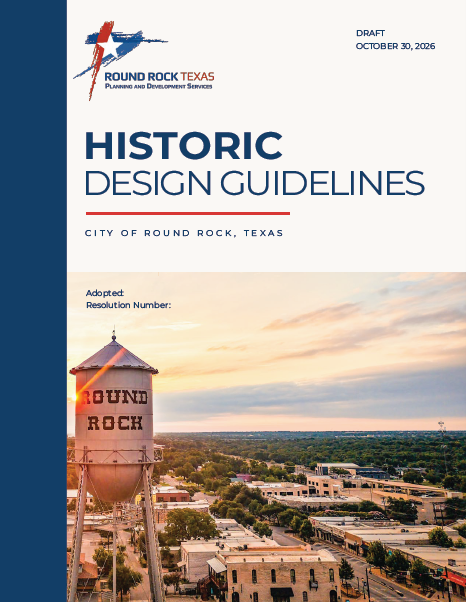
The Historic Design Guidelines are a resource document based on nationally recognized preservation principles and are tailored to Round Rock’s unique history and architecture. The Historic Design Guidelines provide a framework for preserving architectural character, cultural heritage, and historic identity of a community, and ensure that alterations such as renovations, additions, and new construction are compatible with the historic character of an area.
The Historic Design Guidelines apply to properties with H (Historic Overlay) zoning and to properties within historically significant areas as identified in the City’s Zoning and Development Code. Theyhelp property owners, businesses, and design professionals plan for appropriate improvements to properties subject to historic review. They also guide City staff and the Historic Preservation Commission when conducting historic review.
The City originally adopted the Design Guidelines for Historic Commercial and Residential Districts and Properties (Guidelines) in 2000 to serve as guidelines for the Historic Preservation Commission (HPC) and Planning and Development Services (PDS) staff when reviewing alterations proposed to historic properties, districts, and areas. The Guidelines have not been updated since then.
Over the course of the last year, staff have drafted updated Historic Design Guidelines. Staff solicited feedback from the HPC and the public throughout the development of the draft, including through two sessions of public office hours held on August 26 and September 1.
Overall, the proposed updated Historic Design Guidelines seek to:
- Ensure that the guidelines are applicable for properties built between 1945 and 1975, which have aged into eligibility for historic designation since the 2000 guidelines were adopted.
- Clarify preferred treatment of historically designated properties, as well as new construction in historic districts.
- Ensure that the guidelines also function for architectural design review of certain non-historic properties located in historically significant areas, as specified in the City’s Zoning and Development Code.
- Emphasize the importance of understanding a property’s particular history and historic significance before determining appropriate treatments and beginning any work.
- Include new sections with content previously spread across multiple areas of the guidelines or not addressed, including dedicated chapters on property maintenance and on streetscapes, the public realm, and cultural landscapes.
The Historic Design Guidelines do not prevent change. The Historic Design Guidelines ensure that new development respects historic surroundings, helping preserve the architectural features, cultural heritage, and sense of place that make Round Rock unique.
The current draft Historic Design Guidelines is available here: www.roundrocktexas.gov/historicpreservation