Now in your 30s and early 40s, you grew up alongside the internet, your habits more intertwined with technology than previous generations. Yet, you were more likely to play outside as a child than those you preceded.
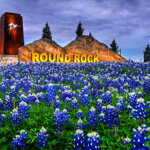
Now, you’ve discovered Round Rock.
A study by financial technology company SmartAsset ranked Round Rock 17th among cities where millennials are moving in large numbers. Approximately 12,000 millennials moved to Round Rock in 2024, or about 8.8 percent of the population, according to SmartAsset.
SmartAsset ranked 254 of the largest U.S. cities based on the relative popularity among millennials moving to that city that year.
Millennials new to the area and more established collectively made up about 32 percent of Round Rock’s total population.
SmartAsset said many millennial households – with more flexibility than ever due to remote work and rapidly developing technologies – opt to move locations in pursuit of job opportunities, higher pay, preferable lifestyles and family considerations, among other reasons.
Locations that may attract millennials are those that may benefit from stronger and more diverse workforces, disposable income flowing to local businesses, and additional tax revenue, cited SmartAsset. On the other hand, it can also lead to more competitive housing markets and a change in the business mix for preexisting locals.
Livability ranked Round Rock no. 10 on its 2025 Best Places to Live in America, and Fortune placed it 12th in its 2023 Best City for Families list.
Round Rock’s job market particularly stood out in the U.S. News and World Report Best Places to Live in the U.S. in 2025-2026 ranking. Unemployment in Round Rock (3.53 percent) is lower than the national average of 4.5 percent.
Round Rock has also been recognized for its diverse workforce (the 2025 Niche Most Diverse report listed it as its 74th most diverse city in the United States). Its median household income (approximately $97,187 to $102,858) ranks higher than the national average.
The city’s housing market has traditionally been the subject of high demand, although conditions have recently shifted in buyers’ favor.
Austin was ranked sixth on the list. No other Central Texas cities made the list’s top 50.
Millennials now make up an estimated 36 percent of the United States’ workforce.