

This post is all about inspiring you to think local, especially when it comes to trees! If you’re planting this fall, consider choosing a native tree instead of a non-native ornamental. Already have a few non-natives in your yard? No worries, we do too. They’re not all bad, but native trees offer more benefits to our environment.
Below, we highlight great Central Texas native alternatives to a popular pick we see everywhere. There are so many more options out there! Check out WilcoScape or Lady Bird Johnson Wildflower Center for additional ideas and plant lists.
Desert Willow vs. Crape Myrtle
We all love the bright, beautiful blooms that crape myrtles give in the summertime. We aren’t necessarily crape myrtle haters, but we want to show why a native choice can be a better fit.
Crape Myrtle Cons:
- Prone to diseases like powdery mildew, bark scale, and leaf spot
- Non-native and can compete with local species
- Offers little food or habitat for birds and pollinators
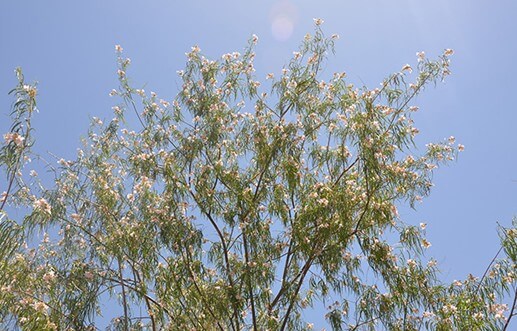
Looking for a tree with the same colorful summer charm as a crape myrtle? Meet the Desert Willow — a beautiful, low-maintenance native that’s perfect for Central Texas landscapes.
Why we love Desert Willow:
- Fast growing and easy to care for
- Showy pink summer blooms April-October
- Medium-sized tree up to 40ft
- Native and drought-tolerant
- Attracts hummingbirds and butterflies, and is a host plant to the white-winged moth
- Resistant to most pests and diseases
Mexican Plum vs. Bradford Pear
Bradford pears are a common sight in our neighborhoods. They grow fast and have showy white spring blooms with a unique and somewhat icky smell. While they look pretty, these trees can cause a few headaches down the road.
Bradford Pear Cons:
- Soft, weak wood that splits easily in storms
- Short lifespan
- Can spread aggressively and become invasive
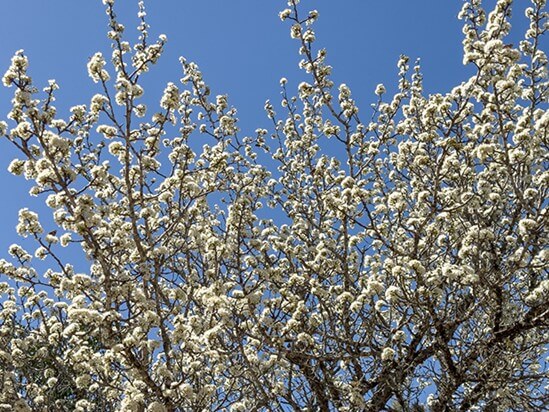
If you love that early burst of spring flowers, the Mexican Plum is a great native alternative.
Why we love Mexican Plum:
- Grows 10–35 feet tall — great for smaller spaces
- Covered in fragrant white blooms each spring, followed by small yellow fruits in late summer
- Native and drought-tolerant
- Attracts birds, fruit-loving mammals, pollinators, and is a host plant for the Tiger Swallowtail butterfly
Rough-leaf Dogwood vs. Magnolia
This one might ruffle a few feathers… We know how beloved Magnolias are! They’re a classic Southern favorite with unique leaves and white flowers. Native to the southeastern U.S, magnolias thrive in rich, acidic, well-drained soils. But here in Central Texas, they often struggle. Our rocky limestone soils and hot, dry conditions just aren’t what these trees are used to.
Magnolia Cons:
- Struggle in alkaline, rocky soils common in Central Texas
- High water needs
- Susceptible to leaf scorch and nutrient deficiencies
- Often grow slowly or appear stressed outside of ideal conditions
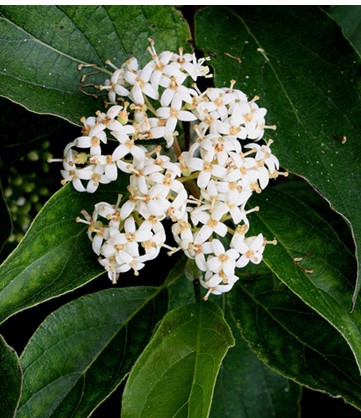
If you’re looking for an ornamental tree with beautiful white flowers, the Rough-Leaf Dogwood is a great native alternative.
Why we love Rough-Leaf Dogwood:
- Showy white blooms from April to July
- Low water needs
- Excellent for erosion control
- Grows up to 20 feet (or can be kept smaller with pruning)
And if you want something with more height, closer to a Magnolia’s stature, consider an American Sycamore, which can soar up to 100 feet tall!
If you’re adding some new trees to your yard this season, consider going native! Native trees like Desert Willow, Mexican Plum, Rough-leaf Dogwood, and so many others are naturally adapted to our Central Texas climate, need less water and maintenance, and provide real benefits for local wildlife.