

This story has been used with permission from the author, Claire Sorenson, Austin Chapter of the Native Plant Society of Texas. The article appeared in the Fall 2026 issue of Texas Native Plants magazine.
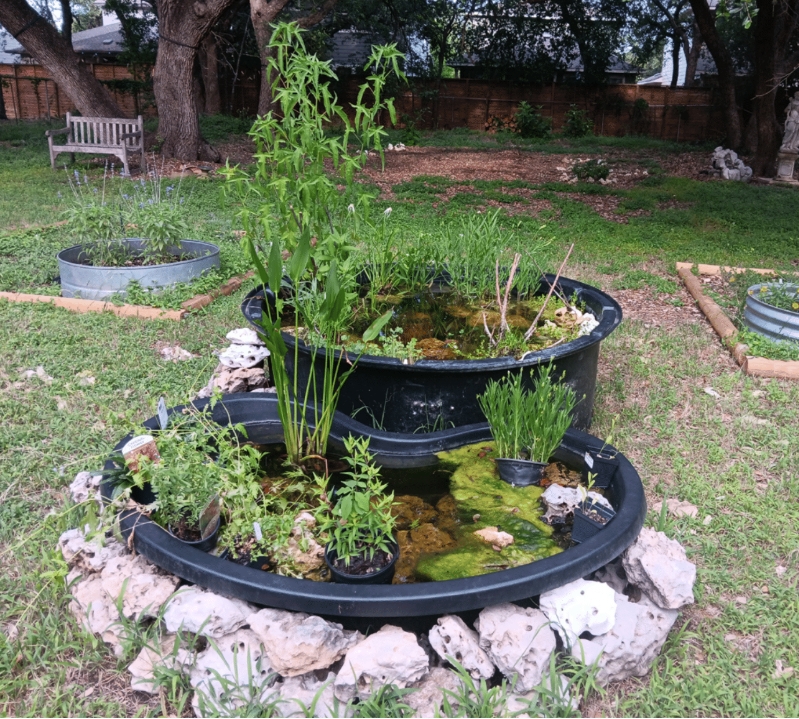
It may seem counterintuitive to set up a pond during the climate crisis we are experiencing. But even deserts have an annual wash, a small stream, or a spring. I live in south Austin and I thought there were no aquatic species in my area because I never saw them, until I added a small pond to my yard, and they showed up almost immediately–seemingly out of nowhere. There is growing interest in “rewilding” our landscapes–for our gardens to not just include beautiful native plants, but to also provide habitat for our dwindling wildlife. With that in mind, which wildlife are most likely to suffer and disappear as our water sources become depleted? You guessed it–aquatic wildlife. I can almost hear the reader sigh: “Oh boy, another thing on my list. Aren’t we already doing enough to help birds, butterflies, and small mammals survive?” I felt the same until I tried it. It was easier than I thought, and very rewarding. Many people, myself included, have never considered adding a water feature to their landscape because they think it is too complicated, but it doesn’t have to be. Like anything, I learned it could be as hard or as easy as I wanted to make it. I favor a simple approach. These are the most basic components I have come up with:
- Containers: Almost any size. Metal livestock troughs, plastic liners from water garden stores, or a large plastic tub all work well.
- Water: No chlorine. It doesn’t harm the plants but is toxic to aquatic wildlife that is attracted to the pond. Chlorine can be removed with chemicals from an aquarium store or by leaving tap water in a container for 24 hours for the chlorine to dissipate. Or skip the tap water and use collected rainwater.
- Wetland Plants**: Native plants are most useful to local wildlife. Below is a list from my pond:
- Whitetop Sedge (Rhynchospora colorata)
- Cardinal Flower (Lobelia cardinalis)
- Marsh Obedient Plant (Physostegia intermedia)
- Halberd Leaf Hibiscus (Hibiscus laevis)
- Mexican Primrose Willow (Ludwigia octovalvis)
- Water Hyssop (Bacopa monnieri)
- Water Willow (Justicia americana)
- Hairy Water Clover (Marsilea vestita)
- Pickerelweed (Pontederia cordata)
- Delta Arrowhead (Sagittaria platyphylla)
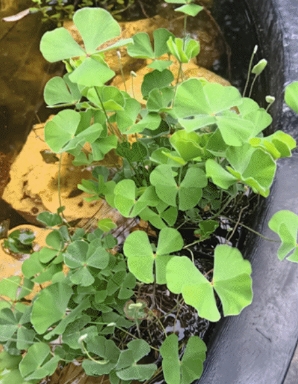
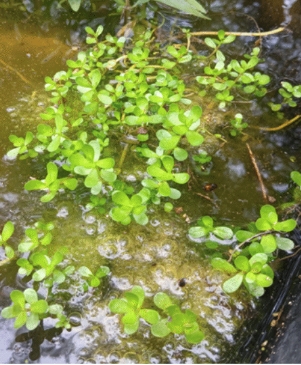
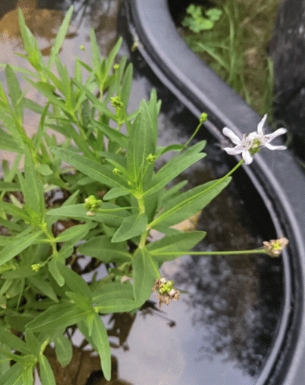
**For a more detailed list of native water plants visit the NPSOT Native Plant Database.
4) Mosquito Control: Dunks (from local hardware stores), or Mosquito Fish (from a local water garden nursery).
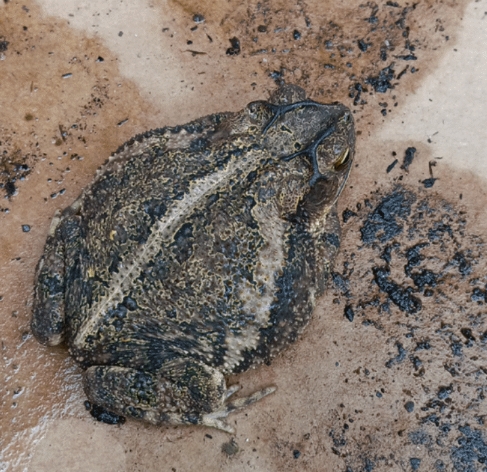
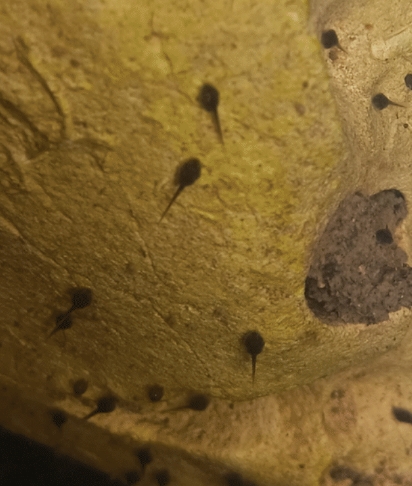
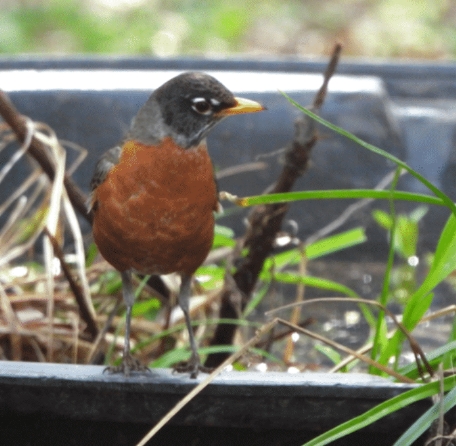
5) Wildlife that our pond supports: Birds were the first to visit our pond to drink water and bathe. A few examples: House Finches, Goldfinches, Summer Tanagers, Eastern Phoebes, Robins, Cardinals, Yellow-rumped Warblers, Bluebirds, Chickadees, Titmice, Orange-crowned Warblers, Cedar Waxwings, Red-winged Blackbirds. Insects like bees and wasps also stop by for a drink. The next critters to move in quickly were Gulf Coast Toads. We first saw two on our patio. Shortly after that we heard their mating calls at night, followed by strings of eggs in our smaller pond, and 24 hours later little tadpoles. I also spotted what looked like dragonfly larva. My husband spotted an adult hovering near the water. There are hundreds of tiny critters swimming in the water and clinging to the sides of the pond, which I have yet to identify. This all happened only a few days to a few weeks after we moved our ponds to a new home just down the road.
6) Common questions and considerations:
- If you want to support amphibians or dragonfly larvae and allow them to reproduce you will need to:
- Use dunks to control mosquitoes instead of mosquito fish. Dunks are harmless to all but the mosquito larvae. Mosquito fish will eat amphibian eggs and tadpoles. Dunks are cheap and only need to be added once a month.
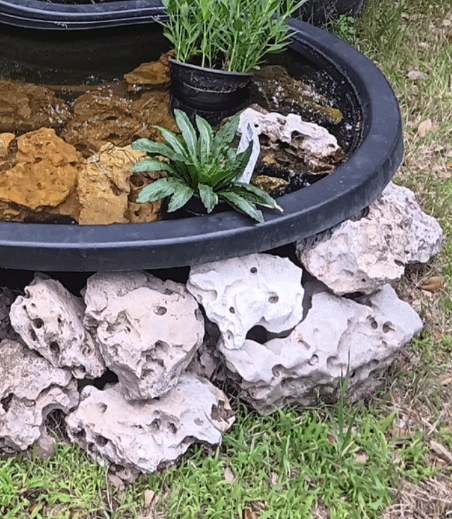
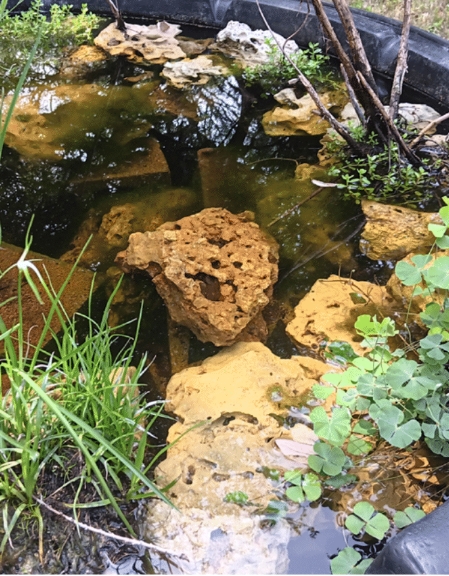
- Provide a way for the amphibians to get in and out of the pond. I stack rocks inside and outside of the pond like a ramp. Anything works. Toads lay eggs in long strings. Frogs lay eggs in large masses. Toad eggs hatch 24 to 48 hours after being laid. They grow legs and leave the pond in about 20-30 days. Frogs take a lot longer (too much to cover in this article).
- Do you need to feed the tadpoles? I don’t. I leave them alone. I have read that they eat algae already in the pond when they are young and small bugs in the pond as they get older.
- Adding rocks inside the pond provides:
- Crevices to place plants at different depths that they require.
- Bird and insect perches to safely drink water and bathe.
- Is an aerator needed? No, plants oxygenate the water. Frogs and toads lay their eggs in still water to prevent them from being swept away by currents. You can add a small floating solar fountain that attracts birds.
- Is a water filter needed? No, plants keep the water clean. Especially the more plants there are.
- What about algae? I only get hair algae when the pond is new. Periodically scoop it out when it takes up too much space. The more your other plants grow, the more the algae are shaded out. Be patient, it takes time.
- Where to buy water plants? Hill Country Water Gardens near Austin, Green Star Wetland Plant Farm near Houston. An internet search will provide more resources in your area.
7) A simple rainwater collection system:
- Any size container works, from a 55-gallon barrel on up. It is best to get any color but white to keep algae from growing inside. You can add dunks for mosquito control.
- We connected our tanks to the downspouts of our gutters using 3-inch PVC pipes.
- The pond can be filled using a small pump from a local hardware store, or gravity if you place your barrel or tank on a raised platform.
- To keep debris from collecting in the bottom of your tank, that can foul up your pump and plug your water lines, put a filter basket at the top of your downspout, and there is also a basket you can put in the top opening of your tank or water barrel.
- There are so many ways to do this. I am only using our set up as an example to help pique interest. Ours is one of the simplest setups you can use. It has worked for us for years to fill our pond and water our gardens. There are a whole range of other options for rainwater collection. An online search will answer some of these questions or contact a professional rainwater collection expert. We are only familiar with our own homemade design.
- NOTE: Round Rock water customers are eligible for our rain water collection rebate.
I hope this has inspired you to include a water feature in your landscape, no matter where you live. Aquatic species need our support as much as any other species, in addition to all the other wildlife that need fresh water sources in or near your landscapes. They are there, we just don’t always know it.