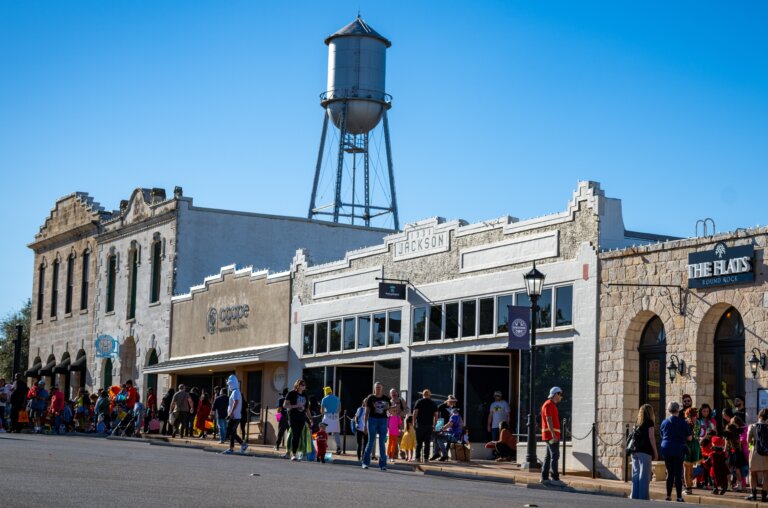
Located just 19 miles north of Austin and less than half a mile from IH-35, downtown Round Rock is anchored by a National Register Historic District and bounded by Brushy Creek, Lake Creek, and the Union Pacific Railroad.
Over the past 25 years, the City has made downtown revitalization a long-term priority, balancing historic preservation with innovative mixed-use zoning and major public investment. Adopting a Downtown Master Plan in 2010 and reinforcing its goals in Round Rock 2030, the City’s comprehensive plan, the City has transformed downtown into a distinct community destination that reflects Round Rock’s heritage while supporting economic reinvestment in a walkable, urban form.
“ The vision for Downtown Round Rock is to become a thriving town center featuring a viable mix of residential, commercial, retail, dining, entertainment and public space uses in a walkable and historically sensitive environment to enhance Round Rock’s economy, quality of life, and sense of place.”
Downtown Mixed-Use Zoning
The Round Rock City Council approved a comprehensive update to downtown zoning regulations on Oct. 23, 2025, adopting four ordinances that revise the City’s Zoning and Development Code and rezone more than 100 downtown parcels to align with the new standards.
The new zoning and map amendments take effect immediately. Existing uses and buildings that do not conform to the new standards may continue as legally nonconforming, though expansions will require compliance. City staff will now review future downtown development applications using the updated regulations, ensuring consistency with Round Rock’s long-term vision for a vibrant, connected and historic downtown.
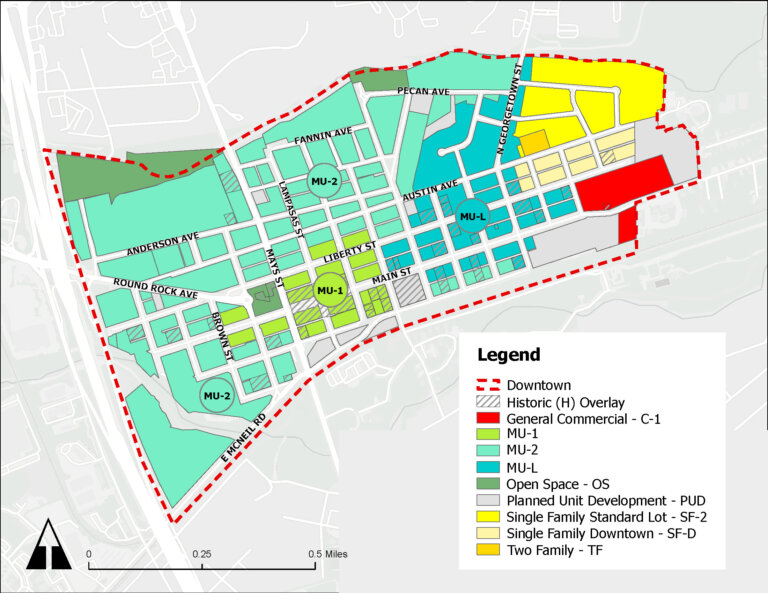
The zoning districts are intended to implement the 2010 Downtown Master Plan’s vision to create a thriving downtown featuring a viable mix of retail, dining, entertainment, residential and public spaces in a walkable and historically sensitive environment.
The Downtown Zoning code amendments were adopted on October 23, 2025.
Downtown Mixed-Use Zoning User Guide
The Downtown Mixed-Use Zoning User Guide is organized by zoning district—MU-1, MU-2, and MU-L—with each section outlining and summarizing the purpose, allowed uses, building form and design standards, a site standards overview, and standards for expansions, conversions, and tenant changes. Subsequent sections cover standards for signs, mobile food establishments, and sidewalk furniture, followed by a section illustrating downtown mixed-use development possibilities through visual examples. The glossary at the end provides definitions of key terms used throughout the guide.
While this guide highlights key standards, it does not cover every regulation. For complete requirements or project-specific questions, please consult with a city planner or review the full Zoning and Development Code.
Preserving Historic Character
Updated downtown mixed-use zoning regulations continue to protect and enhance historic resources while encouraging compatible new development. The city’s Historic Design Guidelines are currently being revised for user-friendliness to guide those proposing alterations to historic properties. Proposed alterations to the exteriors of designated historic properties must first be approved with a Certificate of Appropriateness to confirm that the alterations are consistent with the Historic Design Guidelines.
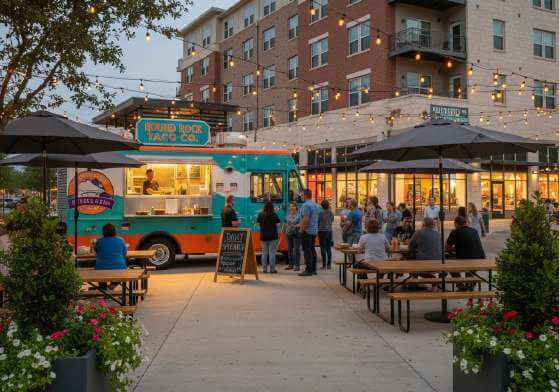
Downtown Permits: Food Trucks (MFEs)
MFEs Downtown must be located on private property or, with approval, in unimproved alleys. They must meet all site location requirements and provide additional screening and separation when located near single-family homes. Only one MFE is allowed per site, except at event centers in the MU-2 district. Both Long-term and Short-term MFE permits are available. Refer to Sec. 2-93 for complete details on siting, screening, and operation. Apply for an MFE permit on the Permit Portal.
Downtown Short-term permits allow a site to host MFEs for up to three days per permit, and no more than four permits may be issued per calendar year. Refer to Sec. 2-93 for details regarding siting and operation of MFEs. Permit fee: $25. The following site types are eligible to host MFEs as a short-term accessory use:
- Restaurant/bar on a lot zoned MU-1
- Restaurant/bar or retail sales and service on a lot zoned MU-2
- Limited mobile food services on lots zoned MU-L with frontage on Main St and Georgetown St when operating in conjunction with a restaurant/bar, retail sales and service establishment, wellness center, and even center. Food preparation is not allowed, including the use of exhaust fans, grills, deep fryers, ranges, griddles or similar cooking equipment. Only food warming, packaging of pre-prepared foods, and beverage preparation are allowed
- Event center on lot zoned MU-2
- Small-scale alcohol production facility
- Place of worship, short-term accessory use permit only
- Government service facility
- Community facility, short-term accessory use permit only
- Planned Unit Development (PUD) as specified in the PUD
- Municipal park and recreation facility (PARD is the applicant for city-sponsored events)
Downtown Long-term permits allow a site to host MFEs for a calendar year. Refer to Sec. 2-93 for details regarding siting and operation of MFEs. Permit fee: $150. The following site types are eligible to host MFEs as a long-term Downtown accessory use:
- Restaurant/bar on a lot zoned MU-1
- Restaurant/bar or retail sales and service on a lot zoned MU-2
- Limited mobile food services on lots zoned MU-L with frontage on Main St and Georgetown St when operating in conjunction with a restaurant/bar, retail sales and service establishment, wellness center, and even center. Food preparation is not allowed, including the use of exhaust fans, grills, deep fryers, ranges, griddles or similar cooking equipment. Only food warming, packaging of pre-prepared foods, and beverage preparation are allowed
- Event center on lot zoned MU-2
- Small-scale alcohol production facility
- Government service facility
- Planned Unit Development (PUD) as specified in the PUD
- Municipal park and recreation facility (PARD is the applicant for city-sponsored events)
Downtown Permits: Signs
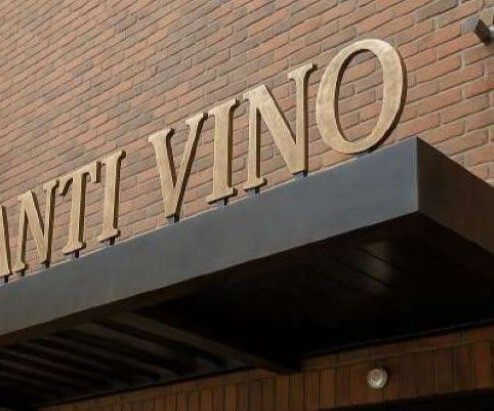
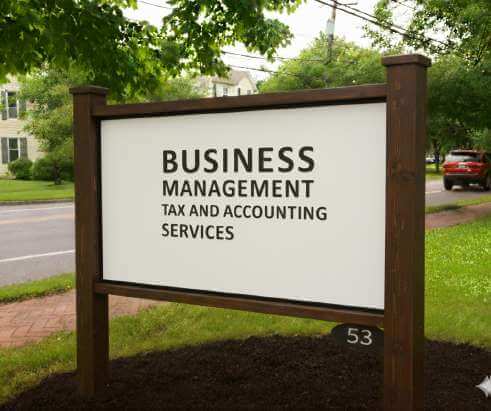
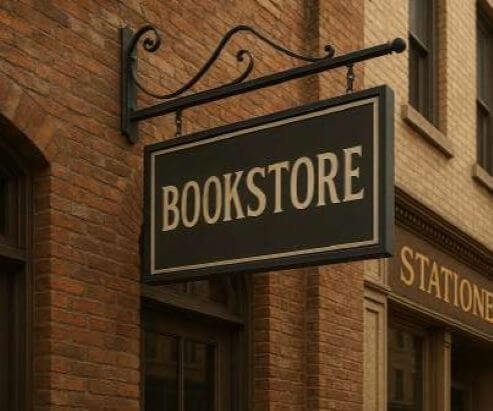
Signs downtown are regulated in the sign code and must meet “Downtown (DT) Special Area” standards. Signs are regulated to preserve a pedestrian-friendly environment and must be compatible with the historic character of the area. All signs must follow design, placement, size, number, spacing, materials, and illumination standards. Apply for a sign permit through the Permit Portal. For more details, refer to Article IX -Signs of the Zoning and Development Code.
Most signs require a permit; check with Planning and Development Services (PDS) before you manufacture your sign. For signs located downtown, the following shall be considered:
- Sign allowances vary based on location. Generally, MU-L allows less signage because of the residential nature of the district.
- Visible plastics are prohibited everywhere.
- The following illumination standards apply:
- Internal illumination is prohibited everywhere.
- Only shielded external or halo illumination is permitted in MU-1 and MU-2.
- Only shielded externally illuminated free standing signs are permitted in MU-L.
- Building signs in MU-L may not be illuminated except for external illumination on Main and Georgetown Streets.
- Electronic message centers are prohibited.
- Building facades may have 1 wall sign per main entrance; placement is generally limited to the ground floor.
- Multi-story buildings within 600 ft. of IH-35 may have 1 additional wall sign facing the highway on the uppermost story.
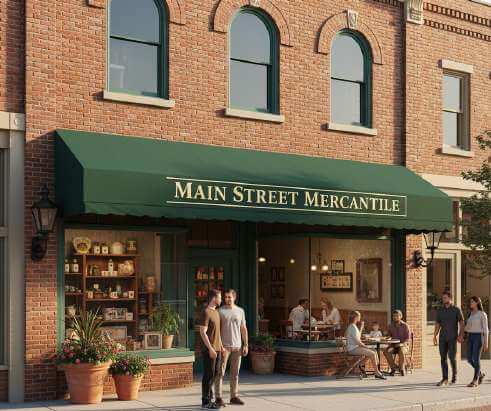
- Hanging/projecting, and canopy/awning signs are allowed if the total display area of all building signs does not exceed the wall sign allowance, with the exception of MU-2 properties which allow an additional 8 sq. ft. hanging/projecting sign(s) and an additional 12 sq. ft. canopy/awning sign(s).
- Window signs can cover up to 50% of window area on an elevation; may not be illuminated with the exception of a 2 sq. ft. incidental sign (typically used for a small “Open” sign).
- Freestanding signs are limited to monument (MU-1 and MU-2 only), post-and-panel, or armature styles, with restrictions on size and height.
- Banners are allowed with strict size and duration limits; permit required.
- Each business is allowed 1 sandwich board: must be pedestrian-oriented, displayed only during business hours, and obtain a license agreement if placed in the right-of-way.
The following additional standards apply:
- The design of signs shall be compatible with the character of the surrounding area and other conforming signs.
- The materials used in the construction of the sign shall be the same or similar to those found in the construction of the City’s historic districts and historic landmarks in the area.
- Wherever possible, colors from historic palettes shall be used.
- Signs shall not cover, obstruct, damage or otherwise adversely affect the building’s salient architectural or historic features.
- The painting or otherwise coating of previously unpainted masonry surfaces requires a Certificate of Appropriateness for property designated as an historic landmark or in the historic district.
- Installation of any attachment or bracket to a historic building shall require a Certificate of Appropriateness. Drilling directly into historic stone or brick rather than mortar shall be prohibited, unless approved with a Certificate of Appropriateness.
Downtown Permits: Sidewalk Furniture
The City of Round Rock has updated the Downtown Sidewalk Furniture Program to allow downtown businesses to place commercial-grade, movable outdoor furniture in the City-owned right-of-way in front of their establishments. The goal is to enhance the pedestrian experience and support a vibrant, welcoming downtown.
All furniture must be commercial-grade, movable, and designed for outdoor use. Acceptable items include planters, tables, umbrellas, benches, chairs, and sandwich board signs. Plastic furniture is not permitted, except for sandwich boards.
To participate, businesses must submit a License Agreement and an Annual Sidewalk Furniture Permit Application to the City. These approvals are required before placing any furniture in the public right-of-way. Apply for License Agreements and annual Sidewalk Furniture Permits through the Permit Portal.
Who needs to apply?
- Property owners: Submit a one-time License Agreement through the Permit Portal, or when the property changes ownership.
- Tenants or property owners: Submit a Sidewalk Furniture permit annually or when a new occupant moves in.
Already have City-provided furniture?
If City-provided furniture is already in front of your business, you only need a License Agreement for any additional items you install that meet the program guidelines.
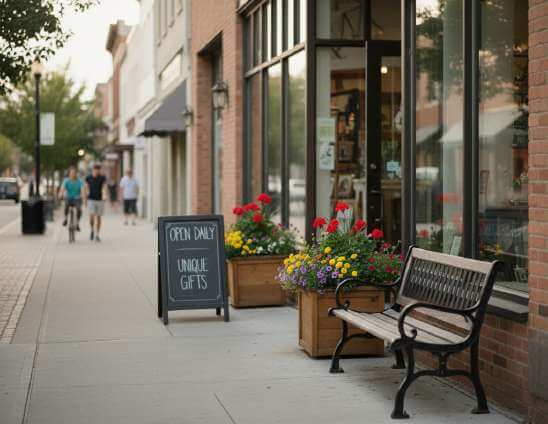
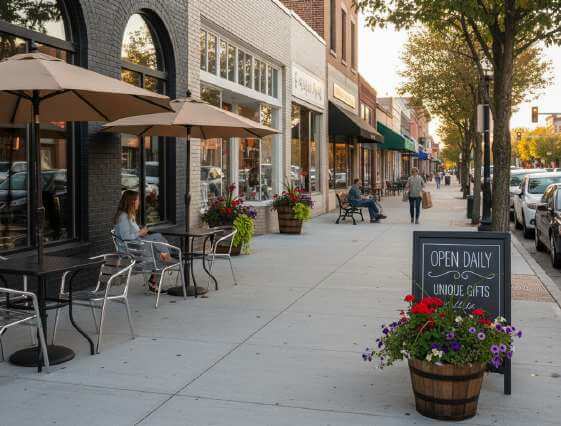
An annual Sidewalk Furniture Permit is required to place items in the public right-of-way, including planters, benches, sidewalk signs, tables and chairs.
Downtown Investment Storymap
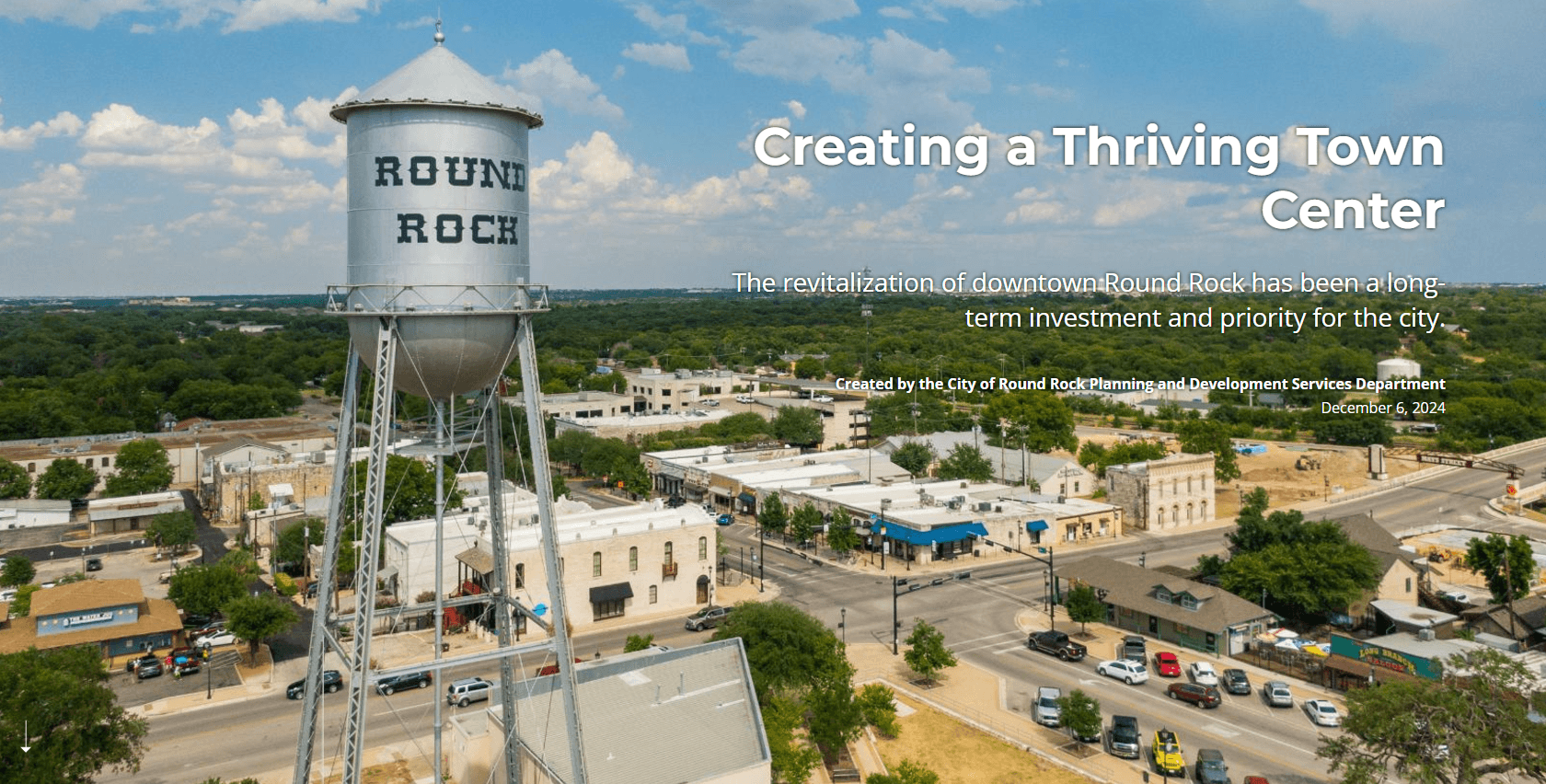
Creating a Thriving Town Center: the revitalization of downtown Round Rock has been a long-term investment and priority for the city. Click here or click image to open the StoryMap.
Downtown Master Plan (2010)
The Downtown Master Plan adopted in 2010 established a vision to create a thriving downtown featuring a viable mix of retail, dining, entertainment, residential and public spaces in a walkable and historically sensitive environment.